
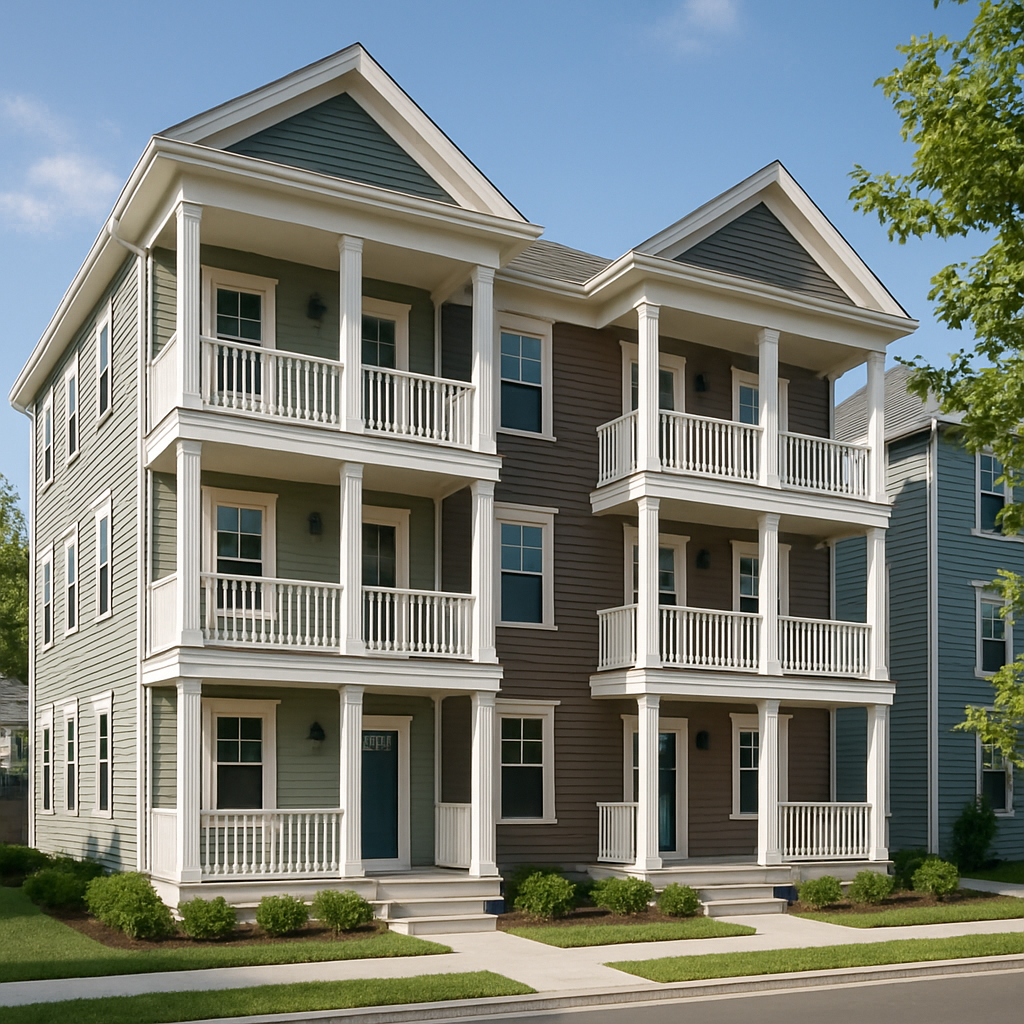


Unlock the potential of your retirement portfolio by exploring the tax advantages and compliance considerations of purchasing real estate with a self-directed IRA.
Maximizing Tax Benefits Through Real Estate in a Self-Directed IRA
Investing in real estate through a self-directed IRA offers significant tax advantages that can enhance long-term retirement outcomes. Depending on whether the account is a Traditional or Roth IRA, investors may benefit from tax-deferred or tax-free growth on rental income, appreciation, and proceeds from the sale of property, provided all transactions remain compliant with IRS guidelines.
For Traditional IRAs, income generated by real estate holdings is not taxed until distribution, allowing investments to compound over time. With Roth IRAs, qualified distributions can be entirely tax-free. This structure is particularly attractive for advisors and investors seeking diversification, inflation hedging, and the potential for outsized returns within a tax-advantaged framework.
Understanding IRS Rules and Prohibited Transactions
The IRS imposes strict regulations on self-directed IRA real estate investments to maintain the tax-advantaged status of the account. Prohibited transactions, as outlined under IRC Section 4975, include any direct or indirect dealings between the IRA and disqualified persons, such as the account holder, certain family members, or entities controlled by them.
Common violations involve personal use of IRA-owned property, self-dealing, or extending credit to the IRA. Self-dealing includes performing work or maintenance on the property yourself, something as simple as mowing the lawn yourself instead of hiring an outside company is considered self-dealing. Using the property yourself in any way, such as temporarily living or vacationing at the property is another example of a prohibited transaction. Even renting to a parent, child, or grandchild is considered a prohibited transaction by the IRS.
Engaging in prohibited transactions can result in severe tax consequences, including disqualification of the IRA, immediate distribution of assets, and potential excise taxes. Advisors and investors must understand these rules to ensure ongoing compliance to protect retirement assets.
Considerations for IRA Real Estate Investors
Real estate held in a self-directed IRA requires specialized strategies distinct from conventional investment accounts. Investors must ensure that all purchase, maintenance, and operating expenses are paid directly from IRA funds. Keeping a cash balance in the IRA to pay these expenses is necessary. All income produced by the property must flow back into the IRA, it cannot be sent to you directly. Leveraged transactions must utilize non-recourse loans, and any debt-financed income may be subject to Unrelated Business Income Tax (UBIT).
It is important for investors to complete due diligence and structure transactions to minimize compliance risk. A thorough understanding of IRS rules and proper documentation are essential for successful outcomes.
The Role of an Experienced IRA Custodian in Real Estate Transactions
An experienced IRA custodian is vital to facilitating compliant real estate transactions within a self-directed IRA. Custodians such as CNB Custody provide administration, transaction processing, and rigorous adherence to IRS regulations, ensuring that all documentation and payments are handled correctly.
By delivering timely reporting, transparent fee structures, and responsive client service, CNB Custody supports both advisors and investors in navigating the complexities of real estate investing. Their expertise reduces administrative burden, mitigates compliance risk, and enables investors to focus on optimizing their retirement portfolios.
While CNB Custody will help to guide you through a thorough understanding of the IRS rules and regulations, it is up to you as the investor to ensure you are properly following these rules.
You are urged to seek professional guidance and/or consider proper diversification and risk tolerance before directing any investment activity. Community National Bank (CNB) does not recommend or evaluate the prudence, merit, viability or suitability of any investment and will not be responsible for the performance of any investment product. CNB will provide custodial services with respect to the investments in your account, but we do not provide investment advice or information, nor are we the agent, partner, employee, representative, or affiliate of any financial representative, product sponsor or other individual or entity except as otherwise disclosed. We are not responsible for and are not bound by any representations, warranties, statements, agreements, disclosures, advice or information made by any such person beyond the terms and provisions contained in the CNB Custodial Agreement, Disclosure Statements, or other CNB forms or CNB documents.
